Absolutely. I’d revise the article so the Homesphere links are woven naturally through the history, not saved only for the final section. That creates stronger topical connections between the historical article and the actual properties you are marketing, while keeping the historical narrative readable.
History of Upper Hill and Kilimani, Nairobi: From Early Nairobi to Modern Real Estate Hubs
Upper Hill and Kilimani tell two closely connected stories of Nairobi’s transformation. Today, both are defined by high-rise apartments, offices, shopping centres, restaurants, hospitals and rapidly changing skylines. Yet their origins were very different.
Upper Hill developed around Railway Hill, institutional activity and Nairobi’s expanding business core, eventually becoming one of the city’s most prominent commercial districts. Kilimani developed primarily as a low-density residential neighbourhood, later transforming into one of Nairobi’s busiest apartment and mixed-use corridors.
Understanding the history of Upper Hill and Kilimani helps explain why land values, apartment development and commercial activity have become so concentrated in these two parts of Nairobi.
Before the Modern City
Before Nairobi became a permanent urban settlement, the area formed part of the wider landscape around the Nairobi River and the routes connecting the interior of what became Kenya.
The modern neighbourhood boundaries of Upper Hill and Kilimani came much later. The decisive turning point was the arrival of the Kenya-Uganda Railway in 1899, which established Nairobi as a railway, administrative and commercial centre.
One of the hills overlooking the early railway settlement became known as Railway Hill, eventually giving rise to the name Upper Hill.
The early Upper Hill area was closely associated with railway housing and colonial administration, while the areas further south and west eventually developed into formally planned residential neighbourhoods.
Upper Hill: From Railway Hill to a Business District
Upper Hill's earliest modern identity was residential and institutional rather than commercial.
Its elevated position and proximity to the railway and CBD made it an attractive location for railway employees, colonial officials and institutions. The area's connection to the original city centre would later become one of its greatest advantages.
As Nairobi expanded after independence, that proximity became increasingly valuable.
Upper Hill was close enough to the CBD to serve as an extension of the city's core, but offered land that could accommodate larger buildings and new forms of development.
Healthcare Becomes an Important Anchor
Healthcare became one of Upper Hill's enduring institutions.
Kenyatta National Hospital traces its history to 1901, when it opened as the Native Civil Hospital. It later became King George VI Hospital and, after independence, Kenyatta National Hospital.
The wider Upper Hill and Hospital Hill area also developed a major private healthcare presence, with Nairobi Hospital tracing its origins to 1902.
These institutions helped give Upper Hill an economic function that extended beyond offices.
By the later 20th century, the neighbourhood was increasingly associated with:
Healthcare ? offices ? hotels ? institutions ? residential property
That combination remains visible today.
Independence and the Opening of Nairobi's Neighbourhoods
Kenya's independence in 1963 brought major changes to Nairobi's social and spatial structure.
Neighbourhoods that had previously been governed by colonial racial restrictions became increasingly integrated.
Upper Hill and Kilimani consequently entered a new phase.
But neither immediately became the high-density environment we know today.
For years, both retained substantial amounts of low-density residential development.
Kilimani: A Low-Density Residential Neighbourhood
Kilimani followed a different development path from Upper Hill.
By the middle of the 20th century it had become an established residential district characterised by large plots, bungalows, maisonettes and substantial gardens.
Its appeal came partly from its proximity to the CBD while retaining a quieter residential environment.
The neighbourhood was also well connected by roads including Ngong Road and Argwings Kodhek Road, giving it a natural relationship with Nairobi's central and southern areas.
At the time, few people would have imagined Kilimani as the high-rise apartment market it would eventually become.
The 1950s: Adams Arcade Arrives
Modern retail around Kilimani actually has a surprisingly long history.
Adams Arcade was established in 1959 along Ngong Road, beginning with a small collection of shops and flats.
This was an early indication that residential neighbourhoods around Ngong Road could support their own commercial centres.
But the major retail transformation came decades later.
Ngong Road Becomes a Commercial Spine
Ngong Road gradually evolved from a route connecting Nairobi to the southern countryside into one of the city's major commercial and transport corridors.
As traffic and commercial activity grew, businesses began appearing along the road and its connecting streets.
Kilimani increasingly became more than a residential neighbourhood.
The pattern was beginning to change:
Homes ? offices ? shops ? restaurants ? services
That gradual diversification set the stage for the much larger transformation of the 1990s and 2000s.
The 1980s: Development Pressure Begins
By the 1980s, Nairobi's population and economy were growing rapidly.
The CBD was becoming increasingly congested, while demand for office and residential space continued to rise.
Kilimani began experiencing more professional offices and commercial activity along its principal roads.
Upper Hill was undergoing a parallel transition.
Businesses needed alternatives to the traditional CBD, and both areas offered something valuable:
Central location with development potential.
The 1990s Were the Turning Point
The 1990s were perhaps the most important decade in the modern history of both neighbourhoods.
Planning policy increasingly accommodated commercial and higher-density development as Nairobi expanded beyond the traditional CBD.
For Upper Hill, this meant increasingly intense office and institutional development.
For Kilimani, it meant growing pressure to redevelop low-density residential plots.
The economics were becoming difficult to ignore.
A large residential plot occupied by one bungalow could potentially support a multi-storey building containing dozens of apartments or offices.
The transition from:
single home ? multi-unit development
was about to accelerate.
Yaya Centre Changes Kilimani
One of the defining milestones was the opening of Yaya Centre in 1992 along Argwings Kodhek Road.
Yaya helped transform the surrounding area into a genuine mixed-use destination.
Shopping, restaurants, offices and residential uses increasingly existed together.
That changed the logic of living in Kilimani.
Residents were no longer simply choosing a home near Nairobi CBD.
They could live within a neighbourhood that provided many of the services they needed close to home.
This created additional demand for apartments.
For buyers looking at property in Kilimani today, that historical relationship between retail, accessibility and residential development is still visible.
Homesphere's Cambridge Garden apartments in Kilimani, for example, sit within the modern Kilimani environment created by decades of this transformation.
Upper Hill Moves Towards Business
While Kilimani became increasingly residential and mixed-use, Upper Hill developed a much stronger commercial identity.
The 1990s saw increasing pressure for residential properties to give way to offices and other higher-value uses.
Upper Hill's proximity to the CBD was crucial.
Companies could remain close to the central business district while obtaining larger and newer premises.
Banks, insurers, professional firms, hospitals and hotels progressively strengthened the area's business identity.
That process eventually produced the skyline associated with Upper Hill today.
The Rise of the Upper Hill Skyline
The transformation became particularly visible during the 2000s and 2010s.
The construction of major office towers changed Upper Hill's physical identity.
Among the most recognisable landmarks are:
UAP Old Mutual Tower
Britam Tower
and numerous other corporate and institutional buildings.
The result was a neighbourhood increasingly defined by high-rise commercial architecture rather than the lower-density landscape of earlier decades.
But residential development also continued.
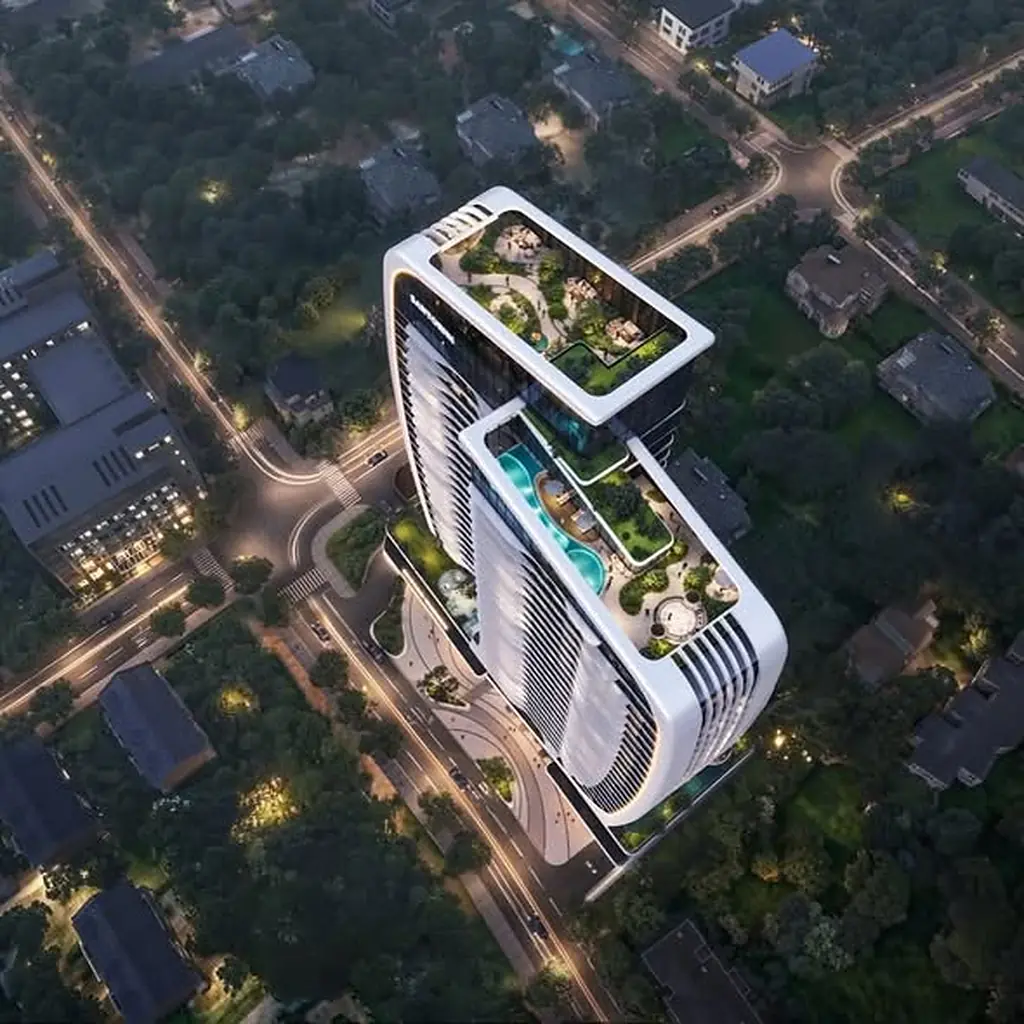
Homesphere's Aria Capital Residency in Upper Hill is a modern example of the continuing residential evolution of the district.
Kilimani's Apartment Boom
Kilimani's transformation took an even more residential direction.
As land became increasingly valuable, developers began acquiring or redeveloping older residential plots for apartment construction.
The process accelerated dramatically during the 2000s and 2010s.
Large plots that once contained individual houses increasingly supported:
Apartment towers
Underground parking
Swimming pools
Gyms
Retail
Rooftop facilities
This was the beginning of the Kilimani skyline most Nairobi residents recognise today.
Homesphere's Longines Bay Kilimani demonstrates the modern form of this development, combining residential apartments and commercial space along the Ngong Road corridor.
Junction Mall and the Expansion of Modern Retail
Another important milestone was the growth of Junction Mall on Ngong Road.
The project was developed from the mid-2000s and expanded in later years, reinforcing Ngong Road as one of Nairobi's major retail corridors.
Together with Yaya Centre, Adams Arcade and other commercial destinations, Junction strengthened Kilimani's attraction as a live-work-shop neighbourhood.
The relationship between property development and retail became increasingly obvious:
More residents ? more shoppers
More shoppers ? more businesses
More businesses ? more employment
More employment ? more housing demand
The development cycle reinforced itself.
Upper Hill Becomes a Major Corporate Address
By the 2010s, Upper Hill had become firmly established as one of Nairobi's major business districts.
Corporate headquarters, banks, hospitals, hotels and professional-service businesses concentrated around the area.
The neighbourhood developed a much stronger daytime working population, while new apartments and serviced residences responded to demand from professionals and corporate tenants.
Today, buyers looking at 2-bedroom apartments for sale in Upper Hill can see how residential development has become an increasingly important part of the district.
Infrastructure Accelerates Both Markets
Neither neighbourhood could have transformed on real estate investment alone.
Infrastructure was critical.
Road improvements, expanding utilities, new commercial centres and improved connectivity made higher-density development increasingly viable.
The Nairobi Expressway, opened in 2022, introduced another major transport connection across the city.
More recently, the Ngong Road–Naivasha Road flyover has added another infrastructure investment along the southern Nairobi corridor serving Kilimani and surrounding areas.
Infrastructure and property development therefore continue to influence each other.
Better connectivity makes locations more attractive.
More development creates greater demand for connectivity.
The Mall Effect
The evolution of Upper Hill and Kilimani also demonstrates the importance of shopping centres in Nairobi's real estate market.
Kilimani's progression can be traced through:
Adams Arcade
Yaya Centre
Prestige Plaza
Junction Mall
modern mixed-use developments
The significance isn't simply that residents have places to shop.
Retail centres create activity, employment, services and footfall, which in turn can strengthen the attractiveness of surrounding residential and commercial property.
Why Kilimani Became So Dense
The apartment boom was ultimately a land-use story.
Kilimani was close to:
CBD
Upper Hill
Ngong Road
Yaya Centre
Junction
Hurlingham
Lavington
That combination gave developers a very valuable piece of Nairobi real estate.
As the economic value of the land increased, the traditional low-density residential model became progressively less dominant.
The modern result is a dense residential market containing everything from compact studios to large three-bedroom apartments.
Homesphere's Oxford Garden Kilimani and Cambridge Garden illustrate how contemporary residential development continues to occupy land that once supported very different forms of housing.
Upper Hill and Kilimani Become Connected
Although their identities differ, the two neighbourhoods have increasingly become part of one urban ecosystem.
A professional can:
Live in Kilimani
Work in Upper Hill
Shop along Ngong Road
Access Nairobi CBD
Return home through the same connected corridor
That relationship has helped both neighbourhoods grow.
Upper Hill provides employment and institutional activity.
Kilimani provides a large and increasingly diverse residential population.
The two reinforce one another.
The Price of Rapid Development
The transformation has not been without challenges.
Higher-density construction places greater demands on:
Roads
Water
Sewerage
Drainage
Parking
Public infrastructure
Research into Kilimani has specifically documented the pressure that rapid densification placed on infrastructure, while Upper Hill has experienced similar tensions as commercial redevelopment accelerated.
The challenge for Nairobi is therefore no longer simply how to develop these neighbourhoods.
It is how to ensure that infrastructure and planning evolve alongside the development.
Upper Hill in 2026
Upper Hill today is a combination of corporate Nairobi and emerging residential Nairobi.
Its defining features include:
Office towers
Banks
Hospitals
Hotels
Financial institutions
Serviced residences
Modern apartments
The older neighbourhood has not disappeared completely.
Instead, old and new continue to exist alongside each other, producing a district where the history of Nairobi's earlier residential form can still be seen beneath the modern skyline.
Kilimani in 2026
Kilimani has become one of Nairobi's most recognisable apartment and mixed-use markets.
Its modern identity is built around:
High-rise apartments
Restaurants and cafés
Retail centres
Offices
Serviced apartments
Fitness and lifestyle businesses
Healthcare and professional services
The transformation is particularly visible along Ngong Road, Argwings Kodhek Road, Wood Avenue, Kindaruma Road and the neighbourhood's network of connecting streets.
Homesphere's growing collection of Kilimani apartments for sale reflects this continuing transformation.
Two Neighbourhoods, Two Different Histories
Although they are geographically close, Upper Hill and Kilimani developed different identities.
Upper Hill
Railway Hill
institutional and residential development
healthcare
CBD expansion
corporate offices
high-rise business district
Kilimani
Low-density residential neighbourhood
commercial corridors
Adams Arcade
Yaya Centre
apartment redevelopment
high-density mixed-use residential district
Both were ultimately transformed by the same larger force:
Nairobi's growth and the rising value of centrally located urban land.
From Bungalows and Railway Houses to Towers
Perhaps the most striking aspect of this history is how dramatically the physical landscape has changed.
A century ago, Upper Hill contained railway housing and institutional uses.
Kilimani was characterised by low-density residential properties.
Today, both neighbourhoods contain towers, apartment blocks, offices, shopping destinations and increasingly sophisticated mixed-use developments.
The transition can be summarised simply:
Early Nairobi
Colonial residential and institutional districts
Independence and urban integration
CBD expansion
Commercial corridors
Shopping centres
Office development
Apartment construction
High-density mixed-use Nairobi
And the transformation is still continuing.
What Comes Next for Upper Hill and Kilimani?
The next chapter will probably be defined by continued redevelopment, densification, mixed-use projects and infrastructure investment.
Upper Hill is likely to continue combining offices, healthcare, hospitality and residential development.
Kilimani will remain heavily oriented toward apartments, retail, hospitality and lifestyle businesses.
The original neighbourhoods have already changed beyond recognition.
The question now is not whether Nairobi will continue to develop them.
It is how the next generation of infrastructure, planning and real estate investment will shape what they become.
Explore Property in Upper Hill and Kilimani
The history of these neighbourhoods is directly reflected in the property market available today.
Explore Aria Capital Residency Upper Hill, 2-bedroom apartments in Upper Hill and 3-bedroom apartments in Upper Hill.
In Kilimani, explore Longines Bay, Cambridge Garden and Oxford Garden.
For buyers considering different budgets, read What Does KSh 5 Million Buy in Nairobi in 2026? and What Does KSh 10 Million Buy in Nairobi in 2026?.
For a wider view of Nairobi's changing property market, explore our Nairobi Property Market 2026 guide.
And for buyers moving from research to ownership, our Property Ownership in Kenya: First-Time Buyer's Guide explains the major stages of the purchase.
Homesphere Kenya — Be Smarter than your Sources.