HOW TO BUY AN APARTMENT IN KENYA: FROM BOOKING TO OWNERSHIP
Purchasing an apartment in Kenya can be an excellent strategy for homeownership, rental income, or capital growth. Understanding the full purchase journey, including costs, legal checks and ownership transfer, is crucial to make a confident investment.
This comprehensive guide presents each step with a focus on the Nairobi market, covering both ready units and off-plan developments, while emphasising key decision points, budgeting, and documentation.

1. DEFINE YOUR PURPOSE AND PROPERTY REQUIREMENTS
Your first task is to clarify what you want the apartment to achieve. Will it be your primary home, a rental investment, a short-stay accommodation (where legally permitted), or a property held for future resale? This purpose will shape your location choice, apartment size, financing options and ongoing costs.
For example, if you are buying a starter home, consider studios or one-bedroom flats at Cambridge Garden, Kilimani. Alternatively, an investor might explore one- and two-bedroom apartments at Riverside Times for rental potential. Always study the floor plans, natural light, storage, parking availability and monthly outgoings carefully.
Investors should estimate net rental income after deducting service charges, management fees, maintenance, vacancy risks, furnishing and financing costs. No development guarantees occupancy or capital appreciation.
2. CHOOSE AND VISIT LOCATIONS FOR SUITABILITY
Location remains a critical factor. Identify neighbourhoods that match the lifestyle or tenant profile you want, and consider commute times, access to services, traffic, noise levels and existing supply.
- Kilimani: Explore options like Capital Vista two-bedroom apartments near Yaya Centre and key business hubs.
- Upper Hill: Look into Aria Capital Residency offering various apartment sizes close to offices and hotels.
- Syokimau: Consider Mara Grove Residence along the Mombasa Road corridor for affordability and growth potential.
Remember, these locations serve as examples to compare, not definitive investment recommendations.
3. SELECT THE RIGHT UNIT AND INSPECT IT THOROUGHLY
Don’t rely solely on floor area figures; request detailed floor plans and clarify whether balconies or external spaces are included in the measurements. Confirm unit position, layout, ventilation, number of bathrooms, finish standards and parking allocation.
For example, compare a two-bedroom apartment at Sunstone on General Mathenge Road with a two-bedroom unit in Upper Hill or a larger three-bedroom at Trident Park 2, Lang'ata.
When buying off-plan, request detailed specifications in writing and clarify which finishes and appliances come with the unit.
4. BUDGET FOR ALL COSTS BEYOND THE SALE PRICE
Buyers should plan for more than the headline price. Your advocate can provide an estimate covering the deposit, legal fees, stamp duty, valuation fees, registration charges, finance costs (if any) and any service charge or utility deposits.
The State Department for Lands’ guidance sets stamp duty at 2% or 4% depending on conditions, so confirm your exact rate. Include furnishing and fit-out costs if planning to rent.
5. CARRY OUT DUE DILIGENCE ON SELLER, LAND AND PROJECT
Hire an independent Kenyan property advocate to investigate the seller's authority to sell, check land ownership records, and examine any restrictions or liens.
For off-plan projects, ask for building approvals, inspect construction progress, review the developer’s track record, and understand how individual units will be registered legally.
Larger units like a three-bedroom apartment in Upper Hill require the same level of due diligence. Remember, brochures and show units don’t replace legal verification.
6. UNDERSTAND RESERVATION PAYMENT TERMS
After choosing your unit, the seller might require a reservation fee. Before paying, obtain written details on the exact unit, price, where the money will be held, if it counts towards the purchase price, how long the reservation lasts, and refund policies.
Reservation and refund policies differ widely among sellers, so have your advocate review the offer letter, which should specify buyer/seller names, unit details, price, payment plan and any incentives.
7. SIGN A TRANSPARENT SALE AGREEMENT
Ensure the sale agreement matches the negotiated terms on unit, price, deposit timelines, construction and handover dates, provisions for changes or defaults, and processes for handling delays or defects.
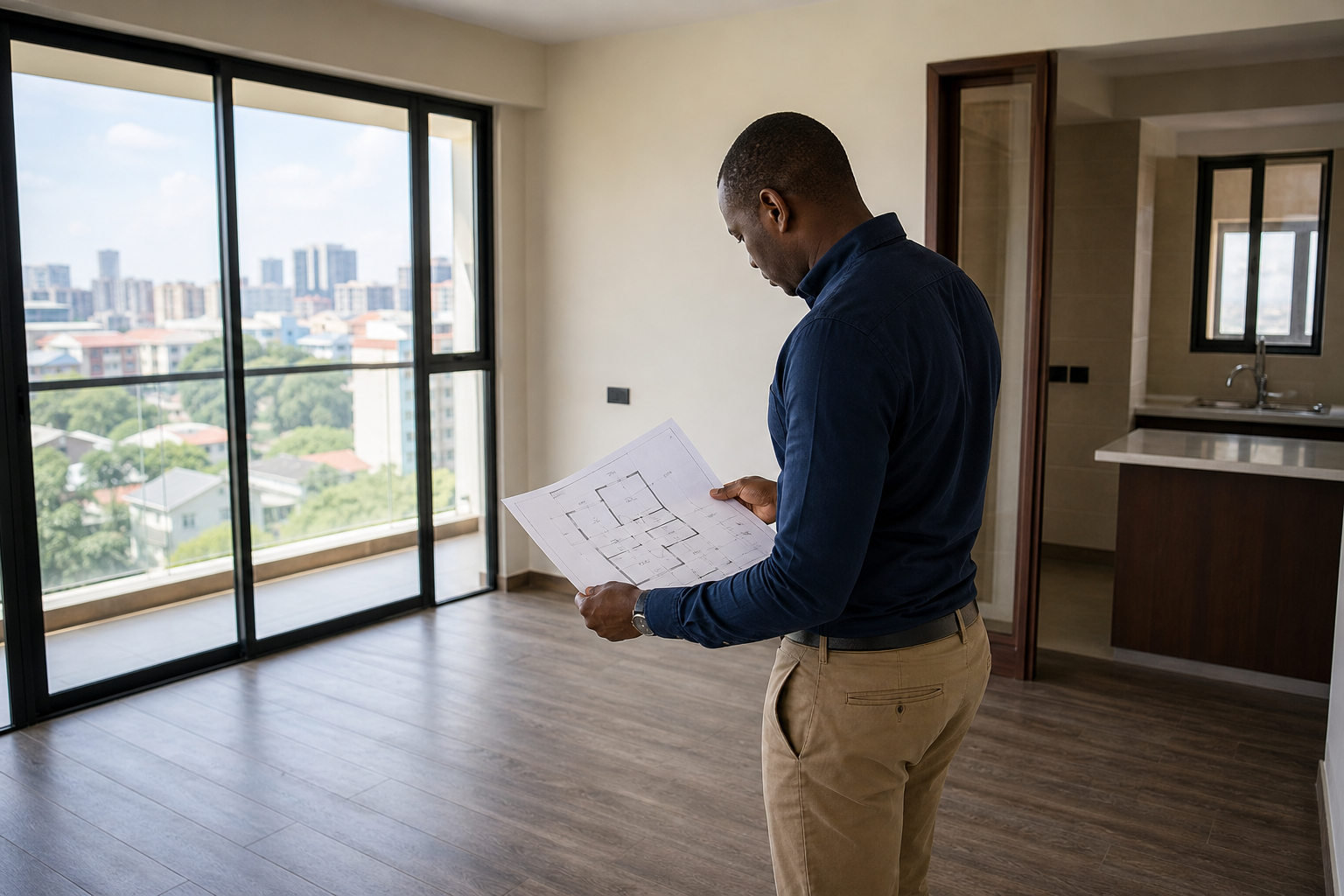
For off-plan purchases such as Anjoy Homes in Upper Hill, payments typically occur in instalments during construction. The deposit and schedules depend entirely on your specific agreement.
If using a mortgage, discuss loan approval and valuation early, confirming lender requirements align with the payment schedule.
8. FOLLOW PAYMENT SCHEDULE AND KEEP ALL DOCUMENTS
Make payments only as specified in official transaction documents and keep all receipts, bank statements and correspondence safely. For off-plan deals, request construction progress reports and clarify policies on delays or design changes.
Verify current service charge contributions and what they cover, including amenities, maintenance and reserve funds—these influence your monthly costs after acquisition.
9. INSPECT THE APARTMENT BEFORE HANDOVER
When the unit is ready, inspect every aspect against contract specs: doors, windows, plumbing, electrical fittings, water pressure, kitchen finishes, bathrooms, parking and access to shared spaces.
Document any defects in writing and agree with the developer on remedies before accepting the keys. Understand what payments or legal clearances remain due, as possession and registration may occur separately.
10. COMPLETE REGISTRATION, CONFIRM TITLE AND OWNERSHIP
Your advocate should guide you through transfer documents, stamp duty payment, and land registry procedures. Apartments in Kenya often rely on a sectional title or alternative legal structure. The Sectional Properties Act sets the legal framework for sectional ownership.
Avoid assuming title registration will be automatic or immediate; timelines vary by project and local authority. Request copies of your registered documents and have your advocate verify ownership in the official records.
DIFFERENCES BETWEEN READY AND OFF-PLAN APARTMENTS
Ready apartments allow you to inspect the actual unit and confirm its condition, service charges and legal registration before purchase.
Off-plan apartments require more reliance on approvals, developer reputation, and contractual assurances. Payments tend to be staged during construction, with added risk of delays or changes.
Neither is necessarily better; choose based on your budget, investment horizon and appetite for construction-related risks.
COMMON BUYER QUESTIONS
Is having a lawyer essential?
An independent advocate is highly recommended to verify land and seller documents and review contracts, especially before making significant deposits.
How much deposit is typical?
Deposit amounts vary widely depending on seller and financing arrangements. Always get the full payment schedule in writing.
Is buying off-plan risky?
Off-plan purchases carry risks such as delays and specification changes. Due diligence on documents, agreements and staging payments can mitigate but not eliminate these risks.
When will I receive my title deed?
It depends on the project’s legal structure and registration progress. Consult your advocate to understand what title documents you will get and when.
START YOUR APARTMENT SEARCH WITH CONFIDENCE
Ask the right questions, compare options carefully, verify all paperwork, budget fully and work with qualified advocates. To explore available properties, browse Homesphere Kenya’s property listings or contact us for expert guidance and viewings.

This guide provides general information; consult your advocate and official authorities for transaction-specific legal and financial advice.